

Sometimes the strangest feeling is realizing: you no longer feel connected to the person you currently are.
You keep repeating:
- the same habits
- the same emotional reactions
- the same fears
- the same routines
even though part of you desperately wants change.
You may feel:
- emotionally stuck
- mentally exhausted
- disconnected from your potential
- uncertain about your direction
And eventually the thought appears: “Maybe I need to reinvent myself completely.”
But then another fear follows: “What if I become fake?”
That fear stops many people from changing. Because they assume reinvention means:
- pretending
- performing
- forcing confidence
- copying someone else’s personality
But learning how to reinvent yourself works very differently.
According to research published by the American Psychological Association, identity is not fixed. It gradually develops through your experiences, beliefs, repeated behaviors, and the way you see yourself. That means learning how to reinvent yourself is not about becoming someone else. It is about intentionally reshaping the identity you already have.
If you already read Identity Crisis: Why You Feel Lost in Life and How to Find Yourself Again, you already understand how emotional confusion often appears when an old identity no longer feels aligned internally.
What Is Identity Shift?
Identity shift is the gradual psychological process of changing how you see yourself through repeated behaviors, beliefs, emotional patterns, experiences, and self-perception. It explains how to reinvent yourself from the inside out rather than by simply changing your appearance, circumstances, or goals.
Your identity is not fixed.
But it does not change overnight either.
Your identity forms through repeated:
- thoughts
- habits
- emotional reactions
- behaviors
- beliefs
- life experiences
Over time the brain builds a consistent internal story of: “This is who I am.”
That story quietly shapes:
- decisions
- confidence
- habits
- relationships
- emotional reactions
- future expectations
Why Many People Feel Stuck in the Same Identity
Because identity becomes: psychologically familiar.
Even when your current patterns create frustration, the brain often prefers:
- predictability
- familiarity
- emotional safety
This is why people sometimes continue repeating:
- old habits
- unhealthy dynamics
- limiting beliefs
- self sabotaging behaviors
even while consciously wanting change.
Your subconscious mind naturally protects familiar identity patterns, even when those patterns no longer serve you.
Pause and Reflect
Sometimes the hardest part of change is not: learning new behaviors.
It is emotionally releasing the old version of yourself.
Why Identity Controls Behavior More Than Motivation
This explains why temporary motivation often fades quickly.
If your identity still internally believes:
- “I am inconsistent.”
- “I always fail.”
- “I am not disciplined.”
- “I am socially awkward.”
then behaviors often return toward those familiar patterns automatically.
The brain naturally seeks consistency between how you see yourself and how you behave. This is why lasting change comes from changing your identity, not relying on motivation alone.
If this feels familiar, You Don’t Change Habits: You Change Identity First explores this concept more deeply.
The Misconception About Reinventing Yourself
Many self help spaces portray reinvention like:
- instant transformation
- dramatic confidence
- becoming an entirely new person overnight
That becomes emotionally unrealistic.
Real personal transformation is usually: gradual psychological restructuring.
Not performance. Not pretending. Not becoming fake.
Real change happens when:
- beliefs shift
- emotional patterns change
- behaviors repeat differently
- self perception evolves slowly
A Real Life Example: Reinventing Social Confidence
Someone has spent years believing: “I am shy.”
So they:
- avoid conversations
- overthink socially
- stay quiet automatically
Then gradually they begin:
- speaking more openly
- challenging avoidance
- practicing social confidence repeatedly
At first the behavior feels uncomfortable because: the old identity still feels stronger internally.
But repetition slowly reshapes self-perception.
Identity changes through repeated evidence. Every small action that matches the person you want to become gives your brain a new reason to believe that identity is real. Affirmations can support change, but lasting identity shifts are built through consistent action.
Another Common Trap: Falling Off Track with Health Habits
Someone identifies as: “A person who never stays consistent.”
Every failed routine strengthens that belief emotionally.
But eventually they stop chasing:
- extreme discipline
- dramatic transformations
and instead build:
- smaller routines
- sustainable habits
- repeated consistency
Slowly the identity begins shifting toward: “I am becoming someone who follows through.”
That internal identity shift makes consistent behavior feel more natural because your actions gradually begin matching how you see yourself.
Why Reinvention Feels Emotionally Uncomfortable
Because identity change creates: uncertainty.
The brain asks:
- Who am I becoming?
- Will people react differently?
- What if I fail again?
- What if this change is temporary?
This emotional discomfort is completely normal because your nervous system naturally treats unfamiliar patterns as uncertain, even when those new patterns are healthier than the old ones.
According to clinical insights from the Cleveland Clinic, lasting behavior change usually develops through gradual repetition and realistic psychological adaptation rather than dramatic overnight transformation.
Feeling uncomfortable does not mean you’re becoming the wrong person. It often means your brain is adjusting to a new version of you.
The Identity Shift Framework
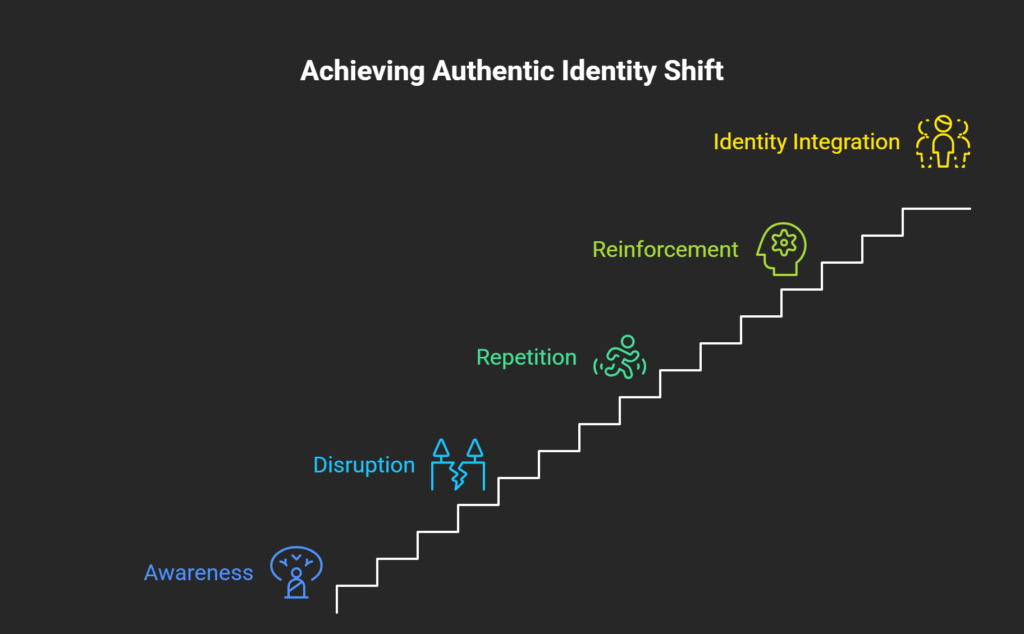 Awareness → Disruption → Repetition → Reinforcement → Identity Integration
- Awareness: Recognizing old behavior patterns
- Disruption: Interrupting automatic reactions
- Repetition: Practicing new behaviors consistently
- Reinforcement: Brain gathers evidence of change
- Identity Integration: New self-perception begins forming
This process is slower than motivation culture suggests, but it creates lasting change because each step builds on the one before it. Learning how to reinvent yourself is not about making one dramatic decision. It is about repeating small identity-consistent actions until they become part of who you are.
Why Environment Quietly Shapes Identity
Many identity patterns are reinforced daily through:
- environments
- routines
- social circles
- digital consumption
- repeated conversations
If your environment constantly reinforces:
- negativity
- inconsistency
- distraction
- emotional chaos
identity change becomes much harder because your brain is continually receiving evidence that supports the old version of you. Your surroundings quietly reinforce the behaviors and beliefs you repeat every day.
One Uncomfortable Truth About Reinvention
You cannot fully reinvent yourself while: emotionally clinging to every old pattern.
Some behaviors, environments, and beliefs eventually need:
- distance
- interruption
- replacement
- conscious reevaluation
Otherwise the old identity keeps rebuilding itself automatically.
How to Reinvent Yourself Authentically
1. Stop Chasing Dramatic Transformation
Extreme reinvention often collapses quickly. Real identity change usually begins through:
- small behavioral shifts
- repeated actions
- emotional awareness
- sustainable consistency
2. Identify the Current Identity Story
Ask yourself: “What story do I repeatedly tell myself about who I am?”
Examples:
- “I always quit.”
- “I am emotionally weak.”
- “I can’t change.”
- “I never stay disciplined.”
Those internal narratives shape behavior constantly.
3. Build Evidence Slowly
The brain changes identity through repeated evidence, not occasional effort. Every small action that matches the person you want to become strengthens your new identity. Small, consistent actions matter far more than short bursts of intensity.
4. Change the Emotional Environment
Reduce:
- overstimulation
- constant negativity
- environments reinforcing old habits
Identity is influenced by repeated emotional states.
5. Practice New Behaviors Before They Feel Natural
At first new behaviors often feel:
- uncomfortable
- unfamiliar
- unnatural
That does not mean you are pretending. It usually means your brain is still adapting to a new identity. With enough repetition, what feels unfamiliar today gradually becomes natural.
Why People Sometimes Return to Old Versions of Ourselves
Identity regression often happens during:
- stress
- emotional exhaustion
- uncertainty
- familiar environments
The brain naturally returns toward: familiar patterns.
This does not mean growth failed. It means identity change requires:
- reinforcement
- repetition
- patience
Long term transformation is rarely perfectly linear.
How to Change Identity Mindset and Beliefs
Beliefs shift gradually when:
- repeated experiences challenge old assumptions
- behavior changes consistently
- emotional patterns evolve
- internal narratives become weaker
This is why action matters more than endless self-analysis. Thinking differently is important, but lasting reinvention happens when new actions are repeated often enough to become part of your identity. The brain trusts repeated evidence more than temporary motivation.
If you want deeper practical guidance, continue with How to Change Your Identity When You Feel Stuck.
Final Thoughts
Reinventing yourself is not about becoming fake. It is about gradually reshaping:
- beliefs
- behaviors
- emotional patterns
- habits
- self perception
- identity narratives
through repeated conscious change.
The most important shifts often happen quietly:
- before confidence appears
- before external success appears
- before other people notice
Because identity transformation begins internally long before it becomes visible externally.
Over time, those small repeated changes stop feeling like something you do and start becoming part of who you are. That is how you reinvent yourself without pretending to be someone else.