
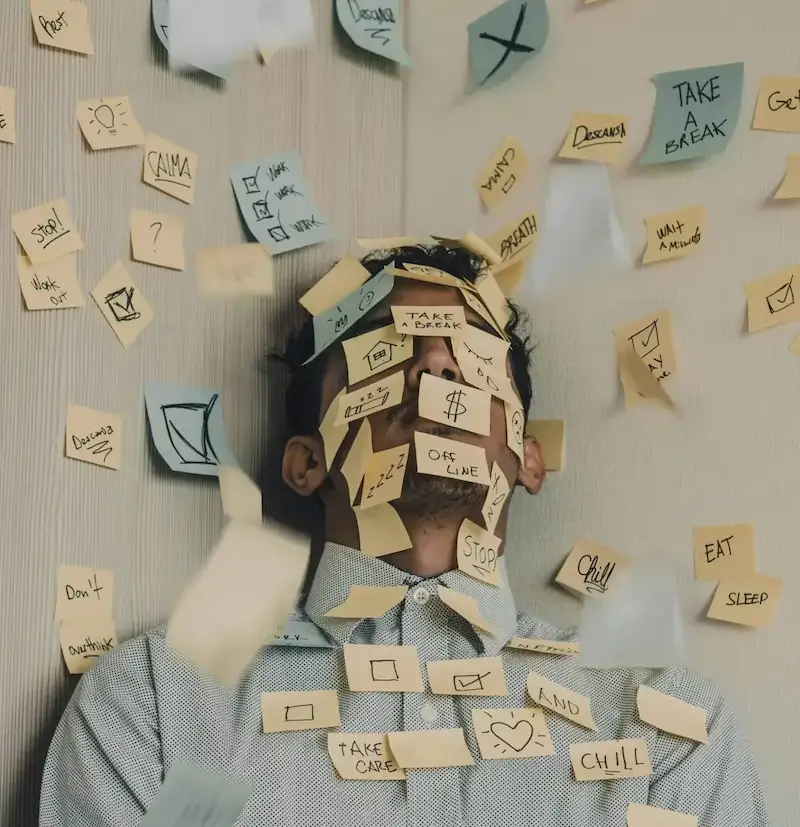
You promise yourself this time will be different.
You start waking up earlier.
You make a schedule.
You buy the notebook.
You try to become “consistent.”
For a few days, it feels possible. Then slowly, something changes. The routine becomes heavier. The motivation disappears.
You skip one day. Then another. And eventually, the habit quietly disappears again.
If this pattern feels familiar, you are not alone.
Many people searching why can’t I stick to habits assume they lack discipline or willpower. But habit failure is usually more psychological than personal.
In many cases, the real issue is not that you do not want change.
It is that your mind is still operating through older emotional patterns and automatic behaviors.
If you have not yet read How Habits Are Formed: Why You Feel Stuck, it helps explain why repetitive behaviors become automatic over time.
If you’ve ever wondered, “Why can’t I stick to habits?”, you’re not alone. Many people believe they simply lack discipline, but lasting habits rarely fail because of weak willpower. More often, the real obstacles are unrealistic expectations, emotional patterns, and subconscious behaviours that quietly pull you back to familiar routines.
Why Do Habits Fail Again and Again?
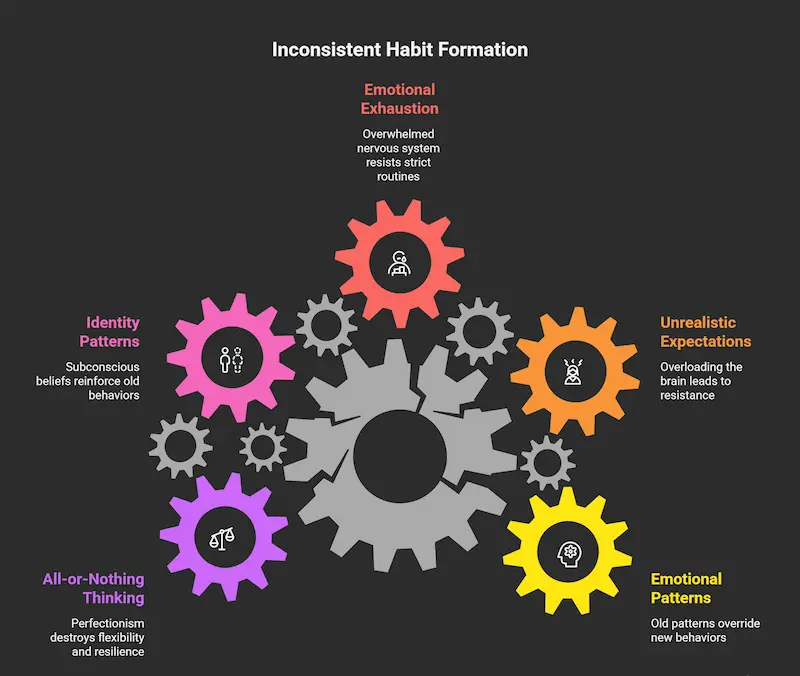
Habits often fail because the brain prefers familiar emotional patterns over difficult behavioral change. Motivation alone cannot compete with subconscious routines, emotional exhaustion, unrealistic expectations, and environments that reinforce old behaviors.
Most people think habits fail because:
- they are lazy
- inconsistent
- weak minded
- not motivated enough
But behavior rarely works that simply. The brain is designed to conserve energy and repeat familiar patterns.
Even unhealthy routines can begin to feel emotionally “safe” because they are predictable.
That is why your mind often returns to:
- scrolling
- procrastination
- avoidance
- emotional eating
- overthinking
- comfort behaviors
even when you consciously want something different.
According to research from Cleveland Clinic, habit formation depends heavily on repetition, environmental cues, and realistic behavioral reinforcement rather than motivation alone.
The Biggest Misunderstanding About Habits
One of the most damaging self help ideas is the belief that lasting habits are created through intense motivation. Motivation is unstable.
It changes:
- with stress
- sleep
- emotions
- energy
- environment
- mental state
That means relying only on motivation creates fragile habits.
This is why people often feel extremely committed at the beginning but emotionally disconnected weeks later.
The brain naturally resists behaviors that:
- feel emotionally uncomfortable
- require uncertainty
- disrupt familiar routines
- challenge identity patterns
And most habit advice ignores this emotional layer completely.
Your Brain Prefers Familiarity Over Improvement
This realization can feel uncomfortable. But your mind is not always trying to improve your life.
Often, it is simply trying to preserve what feels familiar. Even if that familiarity creates frustration.
For example:
A person may genuinely want to:
- exercise regularly
- wake up early
- stop procrastinating
But subconsciously, their nervous system may associate those behaviors with:
- pressure
- failure
- shame
- exhaustion
- unrealistic expectations
So the brain quietly returns to familiar comfort patterns instead.
That is why habit change can feel emotionally heavier than expected.
When Habit Change Conflicts With Your Identity
People often think habits are only about behavior.
But behavior is deeply connected to identity.
If someone has repeated thoughts such as:
- “I never stay consistent.”
- “I always quit.”
- “I am not disciplined.”
- “I have tried before and failed.”
then every new habit attempt is competing against an existing self-image.
The subconscious mind tends to seek consistency between what you believe about yourself and how you behave.
That is why lasting change often feels difficult.
This is also why many people unknowingly undermine their own progress. If you repeatedly find yourself abandoning goals despite genuinely wanting to change, learn more about The Real Reason You Sabotage Your Own Success and how subconscious patterns quietly interfere with lasting behaviour change.
You are not only building a new habit.
You are building a new identity.
Why Small Habit Failures Feel So Personal
Habit inconsistency is rarely just about the habit itself. People often attach identity to their routines.
After repeated failures, the inner dialogue slowly changes:
“Maybe I am just not disciplined.”
“Maybe I always quit.”
“Maybe I cannot change.”
This is where habits begin affecting emotional wellbeing.
The problem is no longer:
- missing workouts
- skipping routines
- losing consistency
The problem becomes:
self trust.
And rebuilding self trust takes more than motivation.
The Habit Loop Most People Never Notice
Most habits follow a simple psychological cycle:
Cue → Emotional Reaction → Behavior → Relief
Example:
Cue
Stress after work
↓
Emotional Reaction
Mental exhaustion
↓
Behavior
Scrolling endlessly on phone
↓
Relief
Temporary emotional escape The brain remembers that relief. So the loop repeats automatically.
This is one reason breaking habits problems often feel stronger at night, during stress, or during emotional overwhelm. The behavior is not random. It is emotionally reinforced.
Why Extreme Habit Plans Usually Collapse
People often try to transform their entire life at once.
They suddenly decide to:
- wake up at 5 AM
- meditate daily
- journal
- exercise
- meal prep
- quit distractions
The plan looks productive. But psychologically, it overloads the brain.
Large behavior shifts create:
- cognitive resistance
- emotional fatigue
- pressure
- perfectionism
- fear of failure
So the routine becomes emotionally difficult to sustain. And eventually the brain seeks relief through older familiar behaviors.
According to Harvard Health Publishing, smaller repeatable changes are significantly more sustainable than dramatic behavioral overhauls.
The Real Problem Is Often Emotional Exhaustion
Many people trying to build habits are already mentally overwhelmed.
They are:
- emotionally drained
- overstimulated
- constantly distracted
- carrying internal pressure
And then they try to force strict routines onto an exhausted nervous system.
That creates resistance. Sometimes the brain is not refusing discipline. It is asking for emotional safety and recovery first.
This is also why consistency habits become harder during:
- anxiety
- emotional burnout
- stress
- major life transitions
A Question Most People Never Ask Themselves
Are you trying to improve your life…
or are you trying to escape how you currently feel?
That difference matters deeply.
Because habits built from:
- shame
- self hatred
- panic
- comparison
often become emotionally unsustainable.
But habits built from:
- self-respect
- clarity
- realistic pacing
- emotional awareness
usually last longer.
Why You Can’t Stay Consistent Even When Motivated
Motivation creates momentum. But systems create stability.
This is why temporary emotional excitement often fades quickly.
Your environment, routines, emotional state, and identity patterns matter far more long term.
If you have read Why You Can’t Stay Consistent: Even When Motivated, you already know that consistency is usually built through repeatable systems, not emotional intensity.
The All or Nothing Trap
One missed day becomes, “I ruined the streak.”
One bad week becomes, “I failed again.”
This perfectionist thinking destroys more habits than lack of intelligence ever will.
Healthy habit formation depends on flexibility. Missing one day is normal.
The danger comes when:
- guilt becomes identity
- inconsistency becomes self definition
- temporary setbacks become emotional collapse
How to Build Habits That Actually Stick
1. Reduce Friction
Your brain naturally chooses the path that requires the least effort. When a habit feels complicated, your mind is more likely to return to familiar behaviors. Reducing friction means making the healthy choice easier than the old one. Make the habit easier than avoiding it.
Examples:
- prepare workout clothes earlier
- place journal beside bed
- reduce app distractions
- simplify routines
The brain repeats behaviors that require less resistance.
2. Start Smaller Than Your Ego Wants
This feels almost “too easy.” That is usually a good sign.
Examples:
- 5-minute walk
- 1 journal paragraph
- 2 pages of reading
- 10 pushups
Small consistency rewires identity more effectively than intense inconsistency.
3. Focus on Identity Before Results
Instead of, “I must lose weight.” Shift toward, “I am becoming someone who takes care of myself.”
Identity based habits usually survive longer than outcome based habits.
4. Track Emotional Triggers
Notice:
- when habits collapse
- what emotions appear first
- which situations trigger avoidance
Awareness changes behavior more than self criticism.
5. Build Recovery Into Your System
Sustainable growth includes imperfect days.
A healthy system should survive:
- low motivation
- stress
- emotional exhaustion
- temporary inconsistency
That flexibility prevents emotional burnout.
One Uncomfortable Truth About Habit Change
Sometimes people are not actually failing habits. They are fighting an internal identity they have repeated for years.
Lasting habit change often begins with changing the thoughts that reinforce your identity. Our guide on How to Rewire Your Thinking Patterns explains practical ways to interrupt old mental loops and build healthier patterns over time.
If someone subconsciously believes:
- “I never stay consistent”
- “I always quit”
- “I cannot change”
the brain quietly reinforces those expectations.
That is why habit change is often psychological before behavioral.












One Response