
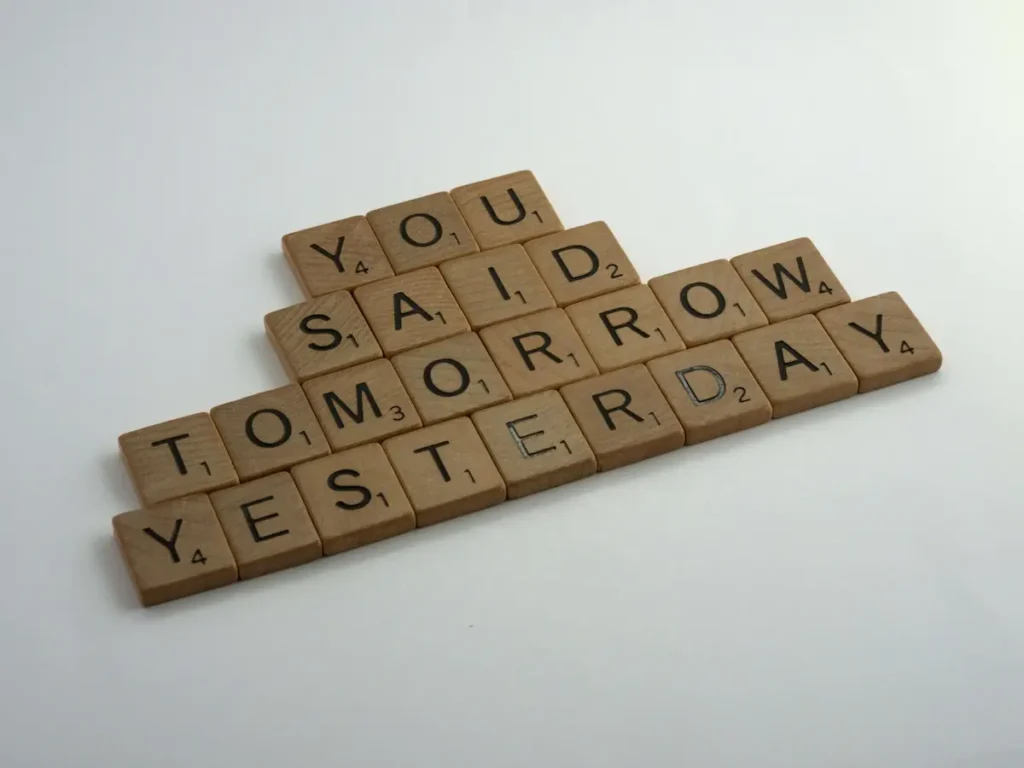
At first you feel motivated.
You plan routines.
You create goals.
You promise yourself:
“This time I’ll stay consistent.”
And for a few days:
things go well.
Then gradually:
- motivation fades
- distractions increase
- routines collapse
- procrastination returns
- discipline disappears again
Eventually you begin wondering:
Why can’t I stay disciplined like other people?
Why do I struggle to be disciplined, even when I really want to change?
Why does discipline disappear after just a few weeks?
These questions usually carry frustration and self criticism.
Because consciously:
you WANT progress.
But maintaining discipline long term feels exhausting.
This happens because discipline is often misunderstood completely.
Many people treat discipline like:
constant willpower.
But psychologically, sustainable discipline works very differently.
According to research from American Psychological Association, self control and discipline are heavily influenced by habits, environment, emotional regulation, and behavioral systems rather than motivation alone.
If you already read Why You Can’t Stay Consistent: Even When Motivated, you already understand how emotional patterns quietly interfere with long-term consistency.
Why Discipline Feels So Hard
Self-discipline feels difficult when your behavior depends mainly on temporary motivation instead of sustainable habits, emotional regulation, supportive environments, and repeated behavioral systems. Stress, overwhelm, distraction, and subconscious avoidance patterns also weaken consistency over time.
Many people think discipline means:
- forcing yourself constantly
- staying motivated forever
- never struggling
- becoming perfectly productive
That expectation creates burnout quickly.
Real self-discipline is usually:
structured consistency.
Not endless emotional intensity.
One Misconception About Discipline
Many people believe discipline means forcing yourself constantly.
They imagine disciplined people waking up every day feeling determined, focused, and productive regardless of circumstances.
But sustainable discipline rarely works that way.
In reality, the most disciplined people often rely less on willpower than most people think.
They build systems that reduce:
- decision making
- friction
- distractions
- emotional negotiation
Strong systems make consistent behavior easier.
Weak systems require constant self control.
That distinction matters.
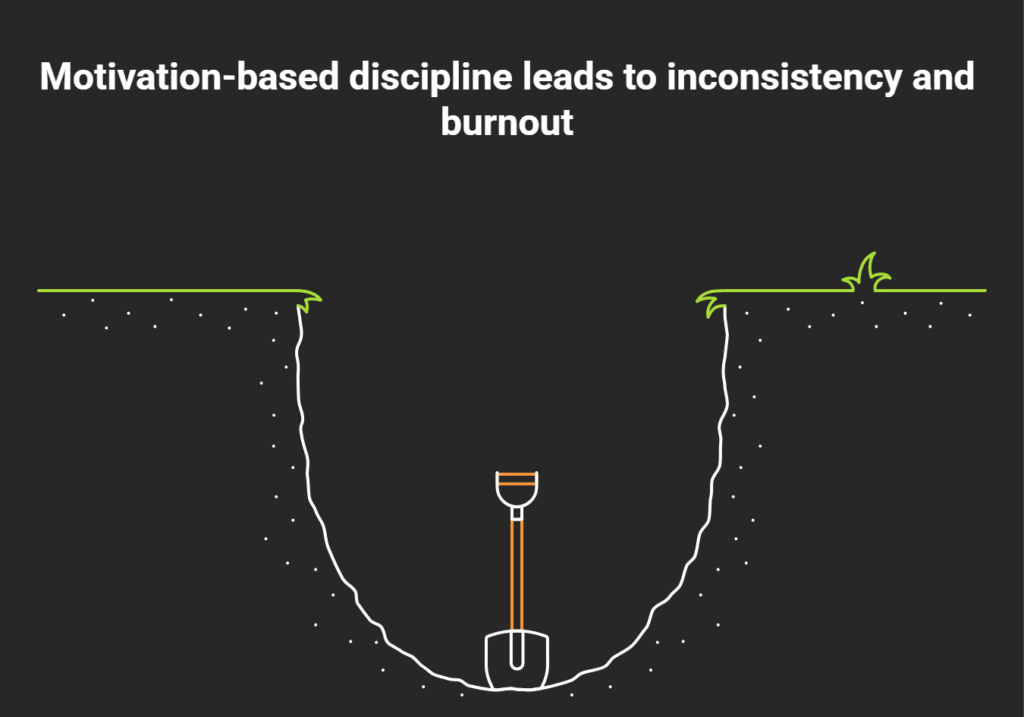
Because if every action requires convincing yourself, fighting temptation, or waiting to feel motivated, discipline becomes exhausting very quickly.
Over time, sustainable discipline is usually less about forcing yourself harder and more about creating conditions that make the desired behavior easier to repeat.
This is one reason habits often outperform motivation. The brain naturally prefers behaviors that require less mental effort.
Why Motivation Alone Always Fades
Motivation is emotional energy.
And emotional energy naturally fluctuates.
Stress.
Fatigue.
Overwhelm.
Life pressure.
Distraction.
All reduce motivation eventually.
So if behavior depends entirely on:
“feeling motivated,”
consistency becomes unstable automatically.
This is why many people repeatedly:
- restart routines
- quit habits
- lose focus
- abandon progress
even while wanting change deeply.
Motivation vs Discipline: What Really Keeps You Going?
Motivation and discipline are often treated as opposites.
But they serve different purposes.
Motivation is the emotional desire to begin. It can make a new goal feel exciting, meaningful, and possible.
Discipline is the ability to take action even when that emotional excitement is no longer present.
This is why motivation may help you start:
- exercising
- studying
- eating differently
- building a routine
- working toward a difficult goal
But discipline helps you return when you feel:
- tired
- distracted
- bored
- discouraged
- emotionally overwhelmed
So, is discipline better than motivation?
Not exactly.
Motivation creates movement. Discipline gives that movement structure. Over time, repeated disciplined actions can become habits, reducing how much conscious effort the behavior requires.
The goal is not to eliminate motivation or force yourself through every difficult moment.
It is to use motivation when it appears, while building systems and habits that help you continue when it fades.
 Why Discipline Feels Emotionally Difficult
Sometimes discipline is not difficult because the task itself is difficult.
It feels difficult because the task activates old emotional experiences.
This is something many people never consider.
A person who repeatedly abandoned routines in the past may unconsciously associate discipline with disappointment.
Another person may associate structure with pressure.
Someone else may connect consistency with criticism because every mistake once felt like proof they were not good enough.
Over time, the brain stops seeing discipline as:
- progress
- growth
- self respect
and starts associating it with:
- failure
- judgment
- frustration
- emotional discomfort
This creates resistance that feels confusing.
Consciously, you want the result.
Subconsciously, part of you wants to avoid the emotional experience attached to pursuing it.
That is why two people can approach the same goal and experience it very differently.
One sees opportunity.
The other feels pressure.
The behavior is visible.
The emotional association underneath usually is not.
And until those associations become visible, discipline often feels harder than it actually is.
Pause and Reflect
Sometimes the real problem is not:
“I lack discipline.”
Sometimes it is:
“My system depends too heavily on motivation.”
The Brain Naturally Avoids Discomfort
Discipline often fails because the brain prioritizes:
- comfort
- efficiency
- immediate relief
- dopamine rewards
not long term goals.
This means behaviors connected to:
- effort
- uncertainty
- discomfort
- delayed reward
naturally create resistance.
Examples:
- exercise
- studying
- focused work
- difficult conversations
- breaking habits
The brain initially prefers easier short-term comfort.
According to Cleveland Clinic, consistent behavior is strengthened more effectively through realistic habit systems than extreme self control.
A Real Life Example: Discipline Collapse After Stress
Someone maintains routines successfully for several weeks.
Then stress increases.
Suddenly they:
- stop exercising
- procrastinate more
- lose sleep routines
- abandon healthy habits
Why?
Because discipline systems built only on:
emotional energy
collapse more easily during difficult periods.
Sustainable systems survive stress better.
Another Way This Often Appears: The Perfectionism Trap
A person misses:
- one workout
- one productive day
- one routine
Then thinks:
“I ruined everything.”
So they quit completely.
This is not lack of discipline.
It is:
All or nothing thinking.
Perfectionism quietly destroys consistency for many people.
Yet Another Hidden Pattern: Discipline and Emotional Avoidance
Example:
Someone plans to work on an important project.
Instead they clean their room. Check emails.
Scroll social media. Watch videos.
The issue is not laziness.
The project activates uncertainty and potential failure.
Avoidance temporarily reduces emotional discomfort.
Why Discipline Habits Matter More Than Willpower
This changes everything psychologically.
Habits reduce:
- decision making
- resistance
- emotional negotiation
When behaviors become automatic:
discipline requires less mental effort.
This is why people with strong routines often appear:
naturally disciplined.
But much of their consistency comes from:
- repetition
- systems
- environment design
- behavioral automation
not constant internal struggle.
Why Identity Shapes Discipline More Than Motivation
Many people assume discipline is simply a matter of behavior.
But behavior is often influenced by identity.
A person who sees themselves as:
- unreliable
- inconsistent
- lazy
- someone who never follows through
experiences discipline very differently from someone who believes consistency is simply part of who they are.
That difference matters more than most people realize.
The subconscious mind constantly looks for evidence that supports existing self-perceptions.
If your internal identity sounds like:
“I always quit.”
“I’ve never been disciplined.”
“I’m bad at routines.”
the brain often treats those beliefs as instructions.
Over time, behavior begins reinforcing the identity.
And the identity reinforces the behavior. The cycle becomes self-sustaining.
This is why lasting change often requires more than better habits.
It requires changing the story you repeatedly tell yourself about who you are.
If you want to explore this idea more deeply, why behavior follows identity more than motivation becomes much clearer once you understand You Don’t Change Habits: You Change Identity First.
The Identity Loop
Identity → Behavior → Evidence → Reinforcement
Example:
Identity
“I’m not disciplined.”
↓
Behavior
Missed routines and inconsistency
↓
Evidence
“I knew I couldn’t stick with it.”
↓
Reinforcement
Identity becomes stronger
Over time, the person is no longer fighting a habit.
They are fighting a self image.
And self images are often far more powerful than motivation.
The Discipline Cycle
Trigger → Action → Reward → Reinforcement
Example:
Trigger
Morning routine
↓
Action
Exercise or focused work
↓
Reward
Progress, clarity, emotional satisfaction
↓
Reinforcement
Brain strengthens routine consistency
Over time discipline becomes easier because repetition reduces resistance.
Why Environment Quietly Destroys Discipline
This part is underestimated constantly.
Your environment shapes behavior massively.
Examples:
- phone notifications
- constant stimulation
- clutter
- digital distraction
- chaotic routines
all increase impulsive behavior.
Meanwhile supportive environments reduce:
- friction
- decision fatigue
- unnecessary temptation
Discipline becomes easier when behavior is designed intentionally.
If distractions constantly pull your attention away, How to Eliminate Distractions and Stay Disciplined explores this pattern more deeply.
One Uncomfortable Truth About Discipline
Sometimes people are not failing because they lack discipline.
They are failing because:
their lifestyle is emotionally unsustainable.
Chronic exhaustion,
overstimulation,
burnout,
poor sleep,
constant stress,
and unrealistic expectations
destroy consistency quietly.
The nervous system cannot maintain high control behavior indefinitely under constant overload.
Motivation vs Discipline: Which Matters More?
Many people believe they need more motivation before they can become disciplined.
In reality, motivation and discipline play very different roles.
Motivation helps you start.
Discipline helps you continue.
Motivation depends on how you feel.
Discipline depends on what you choose to do, even when you do not feel like it.
That is why motivation often comes and goes, while discipline creates long-term consistency.
The people who appear highly disciplined are not necessarily more motivated than everyone else.
They have simply built routines that require fewer daily decisions.
Over time, those routines become habits.
Instead of waiting to feel motivated, focus on taking one small action.
Action often creates motivation, not the other way around.
Reflection Pause
Ask yourself honestly:
- What usually breaks your discipline?
- Does your routine depend too much on motivation?
- Are your goals emotionally sustainable?
- What distractions repeatedly weaken consistency?
- Are you building systems or relying on emotional intensity?
Awareness creates behavioral clarity.
How to Build Discipline Step by Step
1. Reduce Dependence on Motivation
Build routines simple enough to continue:
- during stress
- during low energy days
- during imperfect weeks
Sustainability matters more than intensity.
2. Make Habits Smaller Initially
Large dramatic routines create resistance.
Smaller habits:
- feel manageable
- reduce overwhelm
- survive difficult periods better
Consistency grows gradually.
3. Remove Friction From Good Behaviors
Make desired behaviors easier to begin.
Examples:
- prepare workout clothes earlier
- reduce distractions
- simplify routines
- organize environments intentionally
The brain repeats low resistance behaviors more easily.
4. Stop Restarting From Zero
One imperfect day does not erase progress.
Avoid:
“I failed, so everything is ruined.”
Long term consistency requires flexibility.
5. Build Identity Based Discipline
Instead of:
“I need motivation.”
begin reinforcing:
“I am becoming someone who follows through consistently.”
Identity based repetition creates stronger long term habits.
If you want deeper sustainable systems, continue with How to Build Habits That Actually Stick.
One mistake many people make is trying to become extremely disciplined overnight.
Real discipline grows gradually.
Start with one behavior you can repeat every day, even on difficult days.
Once that behavior becomes automatic, build on it instead of starting over.
If you often feel lazy, remember that laziness is usually a symptom, not the real problem.
Mental exhaustion, emotional overwhelm, unrealistic expectations, and poor systems can all make action feel harder than it should.
Rather than asking yourself how to become more disciplined overnight, ask how you can make today’s action easier to repeat tomorrow.
That simple shift is often what turns short-term effort into long-term discipline.
Why Harsh Self Criticism Backfires
Many people try becoming disciplined through:
- shame
- pressure
- self hatred
- unrealistic expectations
But harshness often increases:
- emotional exhaustion
- avoidance
- procrastination
- discouragement
Sustainable discipline works better through:
- structure
- consistency
- realistic systems
- emotional regulation
not constant self punishment.