
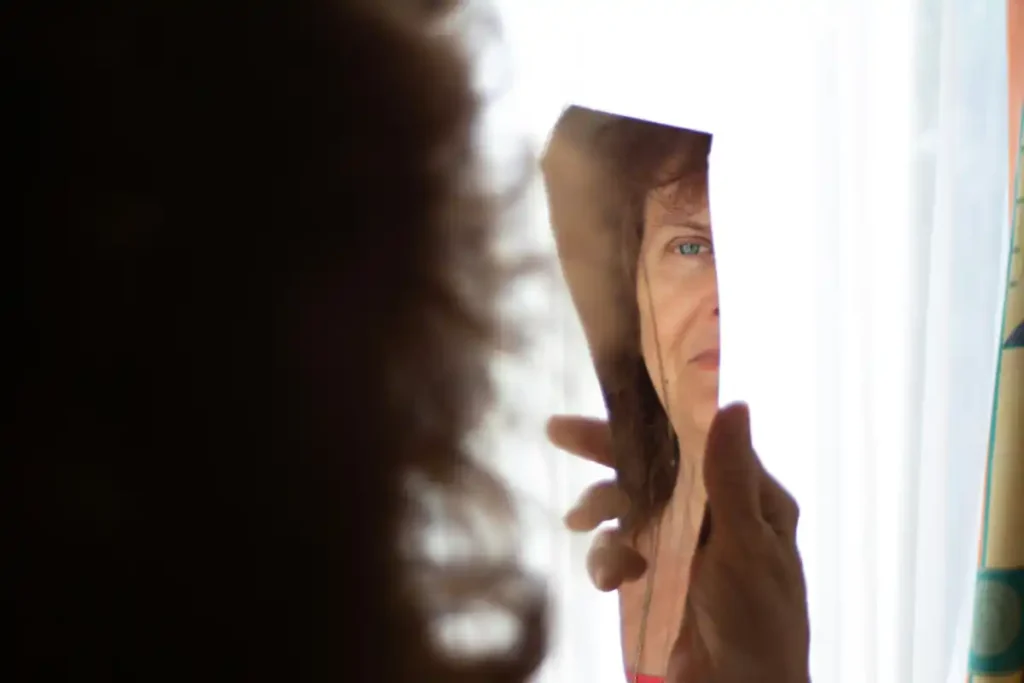
The essay’s been finished for four months. Reread a dozen times, edited past the point of needing it, sitting in a folder labeled “drafts” that has become less a working folder and more a small, quiet graveyard. There’s nowhere it’s actually been sent. Nobody’s been asked to read it. The reason offered, when asked, is usually something about timing, or wanting it to be a little better first. But sometimes the reason is quieter than that, and it doesn’t show up when you ask “why haven’t you sent this.” It shows up if you ask a different question: what does someone who sends things out actually believe about themselves that you don’t, yet.
Why Self-Image Shapes Everyday Behavior
The usual explanation for a pattern like this is a lack of follow-through. There’s often a more specific explanation sitting underneath it: the behavior being attempted doesn’t match an existing, already-established picture of who that person believes they are — There’s often a more specific explanation sitting underneath it: the behavior being attempted doesn’t match an existing, already-established picture of who that person believes they are — and research suggests that people can favor information and responses that confirm their existing self-views, including negative ones.
What Self-Image Really Is
Self-image refers to the internal model a person holds of who they are — not a single trait, but an accumulated set of beliefs: capable or not, organized or not, someone who follows through or someone who doesn’t. Psychologist Hazel Markus’s research gives this model a precise name: the self-schema, a cognitive structure built from past experience that organizes and guides how new, self-relevant information gets processed. Once “I’m not really someone who finishes things” becomes part of that structure, it doesn’t simply sit passively in the background. It can influence how new, self-relevant information is noticed, interpreted, and remembered.
Interestingly, follow-up research by Sheeran and Orbell found that a person’s self-schema can help predict whether an intention actually turns into behavior — people with a self-schema aligned to a given action were considerably more likely to follow through on their intention to do it than people without one. The essay sitting in the drafts folder, then, may not be only a mystery of missing willpower. A self-schema built around “not yet a person who sends things” could be one reason a sincere intention to finally do it doesn’t translate into action.
How the Brain Protects Existing Self-Image
Here’s the part that surprises most people. Psychologist William Swann’s research on self-verification theory found that people are motivated to confirm their existing self-views — not just favorable ones, but unfavorable ones too. Someone with a self-image built around “not the kind of person who puts their work out there” doesn’t only fail to change that pattern despite wanting to. Research suggests they may favor feedback and interpretations that confirm the existing self-view, because that confirmation can provide something psychologically valuable: coherence and predictability, even at the cost of feeling good.
This reframes what’s actually happening when a genuinely wanted change doesn’t stick. It isn’t only that sending the essay feels effortful. It’s that the person may be responding in ways that preserve consistency with an existing self-view — even one they would say, out loud, they’d like to leave behind. This exact dynamic is part of why so many well-intentioned changes stall out, a pattern examined more broadly in Why Most Behavior Change Fails.
Why Behavior Often Follows Self-Image
This explains a pattern that otherwise looks like a contradiction: genuinely wanting to change, while behavior quietly keeps producing the same familiar result. The mind isn’t sabotaging the person on purpose. Instead, existing self-views can make behaviors that fit those views feel more coherent and familiar, even when they conflict with what the person consciously wants.
This is worth distinguishing from the reverse relationship, which is just as real and covered in You Don’t Change Habits: You Change Identity First: behavior also builds self-image over time, through repeated evidence a person accumulates about themselves. Self-image and behavior influence each other in both directions. What self-verification theory and self-schema research add is the piece most conversations about behavior change miss entirely — What self-verification theory and self-schema research add is the piece most conversations about behavior change miss entirely — existing self-views aren’t simply a passive backdrop. They can shape how people process self-relevant information and respond to feedback in ways that help maintain a consistent picture of themselves.
How Changing Self-Image Makes Behavior Feel Natural
This is why behavior change so often feels like fighting yourself when only the behavior is targeted, while self-image stays untouched. Sending the essay may require more than the effort of performing the action itself when that action conflicts with an existing self-view — a different challenge — than the one covered in How to Change Your Identity When You Feel Stuck, which addresses identity shift more broadly rather than this specific behavior-protecting mechanism.
When self-image itself begins to shift — even gradually — behavior that once felt inconsistent with who you believed yourself to be may begin to feel more congruent with that changing self-view. The action may still require effort, but it is no longer contradicting the same internal picture of who you believe yourself to be. How Your Identity Reinforces Your Daily Behavior picks up directly from this point, once the self-image has actually begun to shift.
The BYW Self-Image Framework
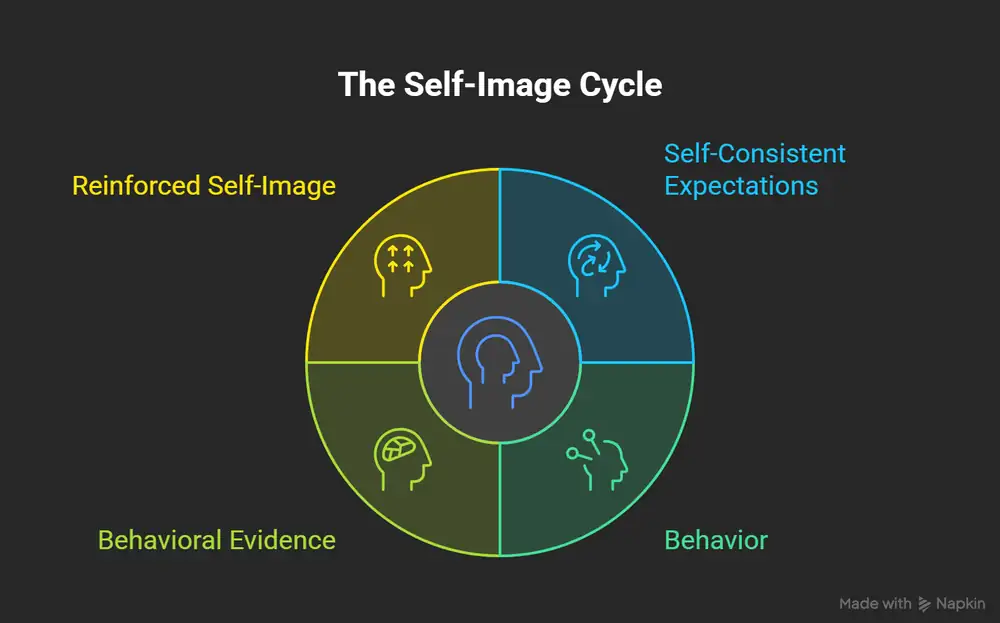 Put together, this describes a self-reinforcing cycle, not a one-directional cause:
Self-Image → an existing internal belief about who you are.
Self-Consistent Expectations → that belief can shape what feels characteristic, plausible, or fitting for you.
Behavior → actions may be influenced by those existing self-views and expectations.
Behavioral Evidence → what you repeatedly do can provide further evidence about the kind of person you believe yourself to be.
Reinforced Self-Image → when that evidence fits the existing self-view, it can help reinforce the same picture of yourself.













One Response