
Why Do I Self-Sabotage? The Hidden Reasons You Keep Holding Yourself Back
Self sabotage often begins as an unconscious attempt to protect yourself emotionally, even when it quietly damages your growth, habits, and relationships.
Table of Contents
You tell yourself:
“This time will be different.”
You feel motivated. You start improving. You make progress.
And then somehow:
- you procrastinate again
- your consistency disappears
- you avoid opportunities
- you withdraw emotionally
- you return to old habits
Sometimes it happens so automatically that you barely understand why.
That is what makes self sabotage emotionally exhausting.
Part of you wants change.
Another part quietly resists it.
If you constantly wonder:
“Why do I keep sabotaging myself?”
the answer is usually deeper than laziness or lack of discipline.
Most people assume self-sabotage is a lack of willpower. In reality, it is often an unconscious attempt to avoid emotional discomfort, protect familiar patterns, or escape situations the brain quietly perceives as unsafe. Understanding why you self-sabotage is the first step toward breaking the cycle.
Self sabotaging behavior often develops through subconscious emotional conditioning the brain learned long before conscious awareness fully understood it.
If you have already read Emotional Triggers: Why You React So Deeply, you already understand how emotional patterns can quietly control reactions before conscious logic catches up.
What Is Self Sabotage?
Self sabotage is a pattern where a person unconsciously behaves in ways that block their own progress, happiness, relationships, goals, or success. These behaviors are often driven by fear, emotional conditioning, subconscious beliefs, or protective psychological patterns rather than intentional self destruction.
Self sabotage rarely looks obvious initially.
It often appears as:
- procrastination
- avoidance
- perfectionism
- inconsistency
- emotional withdrawal
- overthinking
- quitting too early
- unhealthy coping habits
The behavior usually feels frustrating because:
consciously you want growth.
But subconsciously, part of the brain may associate growth with:
- uncertainty
- emotional risk
- pressure
- rejection
- disappointment
- loss of safety
And the brain naturally resists what feels emotionally threatening.
Why the Brain Creates Self Sabotaging Behavior
The Brain Prioritises Safety Over Change
This is important to understand.
The brain’s primary goal is not transformation.
Its primary goal is:
protection and familiarity.
That means even unhealthy patterns can begin feeling emotionally safe simply because they are familiar.
According to Cleveland Clinic, self-sabotaging behaviors are often connected to fear, low self-worth, stress responses, and learned emotional patterns.
So when positive change begins creating emotional discomfort, the subconscious mind may trigger resistance automatically.
The Hidden Emotional Logic Behind Self Sabotage
Many self destructive habits are not random.
They quietly serve emotional purposes like:
- avoiding disappointment
- preventing rejection
- reducing pressure
- maintaining familiarity
- protecting identity
- avoiding vulnerability
For example:
someone who fears failure may procrastinate repeatedly.
But someone who fears:
success and higher expectations
may also procrastinate.
The external behavior looks similar.
The emotional root is different.
💡 Pause and Reflect
Sometimes self-sabotage is not:
“I don’t want success.”
Sometimes it is:
“Success feels emotionally unsafe.”
That distinction changes everything.
Common Signs of Self Sabotaging Behavior
Self-sabotage is not always dramatic. It often appears as small, repeated behaviours that quietly keep you stuck. Recognising these signs early makes it much easier to interrupt the pattern before it becomes another cycle of frustration.
1. Quitting When Progress Starts Improving
You begin:
- building routines
- feeling confident
- making progress
Then suddenly:
- motivation disappears
- avoidance increases
- old habits return
This often happens because growth begins challenging old identity patterns.
2. Procrastinating Important Things Repeatedly
Tasks connected to:
- visibility
- risk
- judgment
- expectations
often trigger subconscious resistance.
The brain temporarily reduces discomfort through avoidance.
But long term:
the cycle increases frustration and shame.
3. Overthinking Every Decision
Sometimes excessive analysis becomes:
emotional avoidance disguised as preparation.
The mind keeps thinking instead of acting because action feels emotionally uncertain.
4. Destroying Relationships Through Emotional Reactivity
Self sabotage also appears in relationships.
Examples:
- pushing people away
- becoming defensive
- testing reassurance constantly
- withdrawing emotionally
- expecting abandonment
These patterns often develop from subconscious emotional conditioning and fear based expectations.
Real-Life Examples of Self-Sabotage
Self Sabotage and Success
Someone finally begins succeeding professionally.
Instead of feeling excited, they suddenly:
- procrastinate more
- avoid opportunities
- become emotionally overwhelmed
- stop showing consistency
Why?
Because the subconscious mind may associate:
- visibility
- pressure
- responsibility
- expectations
with emotional danger.
So the brain attempts to restore familiarity unconsciously.
Relationship Self Sabotage
A person deeply wants closeness.
But when relationships become emotionally intimate, they:
- emotionally withdraw
- overreact
- create conflict
- shut down communication
Consciously they want connection.
Subconsciously vulnerability feels unsafe.
So self protective patterns activate automatically.
Why Self Sabotage Feels So Automatic
Self sabotage often becomes:
conditioned behavior.
The cycle usually looks like this:
Trigger → Emotional Discomfort → Avoidance Pattern → Temporary Relief → Reinforcement
Example:
Trigger
Opportunity or pressure
↓
Emotional Discomfort
Fear or overwhelm
↓
Avoidance Pattern
Procrastination or withdrawal
↓
Temporary Relief
Reduced emotional tension
↓
Reinforcement
Brain repeats pattern later
Over time the loop strengthens automatically.
Why Does Self-Sabotage Become a Habit?
Every time avoidance brings temporary emotional relief, the brain learns that the behaviour worked. Even though the long-term result is frustration, the short-term reduction in discomfort reinforces the pattern. Over time, the brain begins repeating the behaviour automatically whenever similar emotional triggers appear.
Common Misconceptions About Self-Sabotage
Self-Sabotage Is Not the Same as Self-Hatred
Many people believe:
“I must secretly hate myself.”
Not necessarily.
Most self sabotage is less about self hatred and more about:
emotional protection.
The brain is often trying to:
- avoid pain
- maintain familiarity
- reduce uncertainty
- protect emotional stability
Even if the strategy becomes harmful long term.
That understanding creates more self awareness and less shame.
Why Childhood Conditioning Sometimes Matters
Certain subconscious beliefs often form early.
Examples:
- “I am not good enough.”
- “Success creates pressure.”
- “Mistakes are dangerous.”
- “Love can disappear.”
- “I should not take up space.”
Over time these beliefs quietly shape:
- behavior
- confidence
- emotional reactions
- decision making
- self worth
According to Psychology Today, subconscious emotional conditioning strongly influences self-defeating behavioral patterns later in life.
How to Stop Self Sabotaging Behavior Patterns
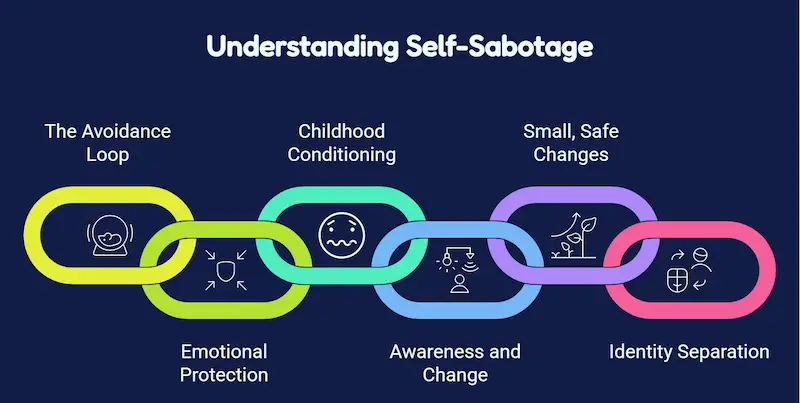
1. Increase Awareness Before Trying to Force Change
You cannot change patterns you do not notice.
Ask yourself:
- When do I sabotage progress most often?
- What emotional state appears before it?
- What feels emotionally threatening about success or change?
Awareness weakens automatic behavior.
2. Identify the Emotional Fear Underneath
The visible behavior is usually not the real problem.
The deeper emotional fear may be:
- rejection
- pressure
- failure
- vulnerability
- losing control
- judgment
Understanding the emotional layer matters more than surface motivation.
3. Reduce All or Nothing Thinking
Many people sabotage progress after:
- one mistake
- one missed day
- one setback
Perfectionism creates collapse cycles.
Sustainable growth requires flexibility.
4. Build Smaller Safe Changes
Extreme transformation often overwhelms the nervous system.
Smaller behavioral shifts create less subconscious resistance.
This is one reason sustainable habits work better long term.
5. Separate Identity From Old Patterns
Self sabotage becomes dangerous when people begin thinking:
“This is just who I am.”
Patterns are learned. Not permanent identity.
That distinction matters psychologically.
💡 Reflection Pause
Ask yourself honestly:
- What areas of life do you sabotage repeatedly?
- What emotional fear usually appears underneath?
- When do you abandon progress most often?
- Does success feel emotionally safe or emotionally threatening?
- What old pattern keeps repeating automatically?
Why Harsh Discipline Usually Fails
Many people try fighting self sabotage through:
- shame
- pressure
- extreme discipline
- self criticism
But harshness often increases:
- emotional overwhelm
- avoidance
- nervous system stress
- fear based resistance
Understanding patterns creates more sustainable change than attacking yourself constantly.
If this pattern feels familiar, continue with How to Stop Self-Sabotaging Yourself to learn practical techniques for interrupting these subconscious cycles. You may also find How to Build Habits That Actually Stick helpful for creating behaviours that are easier to maintain, and Emotional Triggers: Why You React So Deeply if you want to understand the emotional patterns driving these reactions.
Is Self Sabotage a Conscious Choice or a Subconscious Loop?
When you find yourself breaking your own consistency or ruining progress, it rarely stems from a conscious desire to fail. Consciously, you are completely invested in your growth, your goals, and your success. The breakdown happens beneath the surface, where your subconscious mind associates unfamiliar growth with vulnerability or danger.
Subconscious self sabotage functions as a primitive protective mechanism. If your nervous system is conditioned to view stress, chaos, or low self-worth as its baseline “safety zone,” it will perceive positive, stable changes as a threat to your predictability. To protect you from the unfamiliarity of succeeding, your subconscious mind quietly triggers old, automated comfort loops like procrastination or overthinking to pull you back into what it considers safe.
Overcoming this feedback loop requires shifting your focus from aggressive self discipline to deep internal awareness. By recognizing that your self sabotaging habits are simply misguided attempts at emotional safety, you can gently retrain your nervous system to tolerate success. True behavior change begins when your conscious goals and your subconscious conditioning are finally brought into alignment.
Final Thoughts
Self sabotage is rarely random.
It is often the result of:
- subconscious emotional conditioning
- fear based protection patterns
- nervous system familiarity
- identity conflicts
- repeated emotional reinforcement
The goal is not becoming perfectly disciplined overnight.
The goal is not to become someone completely different.
The goal is to understand why these patterns developed, recognise them sooner, and respond differently each time they appear.
Every moment of awareness weakens the old pattern and strengthens a new one. Change rarely happens all at once, but every small interruption of the cycle is evidence that lasting change is possible.
To continue exploring these deeper patterns, read The Real Reason You Sabotage Your Own Success next.
Continue Your Journey
Understanding why you self-sabotage is only the beginning. These related articles will help you uncover the deeper patterns behind your behaviour and start creating lasting change.
The Real Reason You Sabotage Your Own Success
Discover why success itself can feel emotionally unsafe and how subconscious beliefs can quietly hold you back even when you want to move forward.
How to Stop Self-Sabotaging Yourself
Learn practical, psychology-based strategies to interrupt self-sabotaging patterns, build healthier habits, and respond differently when old behaviours resurface.
Emotional Triggers: Why You React So Deeply
Explore how hidden emotional triggers shape your thoughts, decisions, and reactions—and why recognising them is essential for breaking subconscious patterns.
If This Pattern Feels Familiar
Can Self-Sabotage Happen Without You Realising It?
Yes. Many self-sabotaging behaviours operate below conscious awareness because they are driven by learned emotional patterns rather than deliberate choices. This is why people often recognise the pattern only after repeatedly experiencing the same setbacks, relationships, or habits.
Why do I subconsciously sabotage my own success and happiness?
Self sabotage is rarely an act of intentional self destruction. Instead, it operates as a subconscious defense mechanism. When positive changes, such as professional visibility, personal growth, or emotional vulnerability, threaten to disrupt what your nervous system considers “familiar,” the brain flags that unfamiliarity as a psychological risk and triggers resistance to force you back into old, predictable loops.
What are the most common signs of behavioral self sabotage?
On the surface, self sabotage frequently masquerades as low motivation, chronic procrastination, and overthinking. Emotionally, it manifests as a subconscious withdrawal from relationships or quitting projects right when progress begins to peak. These behaviors are defensive strategies the mind employs to protect itself from potential failure, judgment, or heightened expectations.
Why does positive personal growth feel so uncomfortable?
The human brain prioritizes psychological familiarity over transformation. Even if a past emotional pattern or habit was harmful, it is viewed by the subconscious mind as safe simply because it is known. Stepping into a healthier lifestyle or dynamic forces the nervous system to navigate uncertainty, causing the brain to fight to restore its old equilibrium.