A full eight hours, no interruptions, and still — by mid-morning, the tiredness is already back. Not the kind that a nap fixes, either. The kind that sits behind the eyes all day regardless of how much rest came before it.
If you’ve ever found yourself wondering, “Why am I always tired even after sleeping?”, you’re not alone. The instinct is to treat this as a sleep problem and try to fix it with more sleep, better sleep, or an earlier bedtime. Sometimes that helps. Often it doesn’t, because the exhaustion was never really about hours slept in the first place.
 Fatigue Isn’t Just Physical
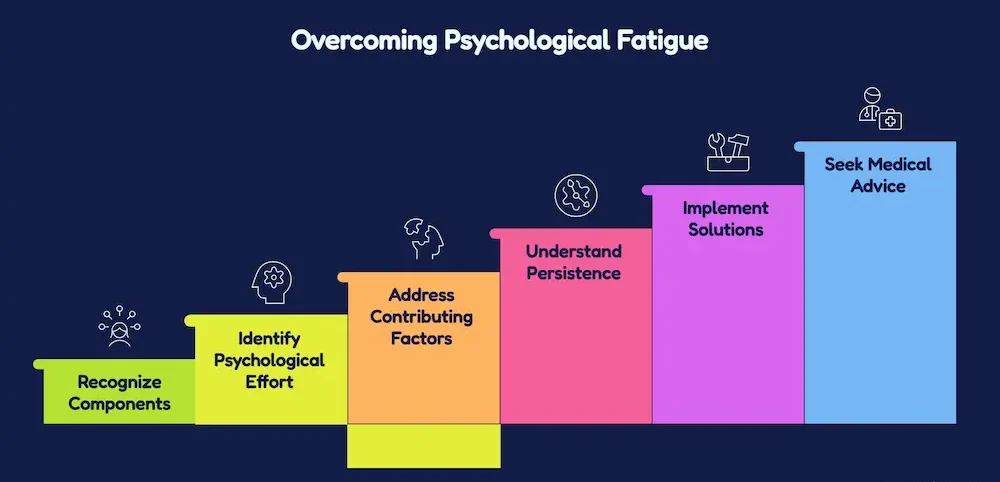
According to Harvard Health Publishing, fatigue actually has three separate components: physical (weariness or weakness), mental (difficulty concentrating), and emotional (lack of motivation). Sleep primarily addresses the first one. It restores physical energy reasonably reliably. It doesn’t automatically restore the other two.
This distinction matters more than it might seem. Someone can wake up physically rested — no headache, no grogginess from poor sleep quality — and still feel mentally foggy and emotionally flat within an hour of starting the day. That’s not a contradiction. It’s a sign the exhaustion was coming from somewhere sleep doesn’t directly reach.
The Cost of Ongoing Self-Regulation
Here’s where the psychological piece comes in. A significant, often invisible source of daily fatigue isn’t physical exertion at all — it’s the accumulated effort of managing difficult thoughts, urges, or emotions throughout the day, over and over, often without noticing it’s happening.
This shows up in specific, ordinary ways. Someone resisting the pull to procrastinate on something important is spending real mental effort every time they redirect their attention back to the task — a pattern covered in more depth in Why You Can’t Stay Disciplined: How to Fix It. Someone catching themselves mid-avoidance and pushing through anyway is doing the same kind of effortful regulation, explored in How to Stop Self-Sabotaging Yourself. Even the ordinary effort of trying to build a new habit against the pull of an old one — covered in How to Build Habits That Actually Stick — draws on this same limited capacity.
None of this shows up as physical exertion. It doesn’t burn calories the way a workout does. But it’s genuinely effortful, and unlike physical tiredness, it doesn’t reliably reset overnight the way muscle fatigue does — particularly if the same demands are still waiting the next morning.
Other Quiet Sources of the Same Kind of Fatigue
Self-regulation is one of the most common contributors to this kind of tiredness, but it’s rarely working alone. A few other psychological drains tend to operate quietly alongside it, and are worth naming briefly.
Decision fatigue:
Every day involves dozens of small decisions — what to prioritize, how to respond to a message, what to say and what to leave unsaid — and each one requires a little mental effort, and over time that effort adds up, however minor it seems in isolation. This is part of why a day full of meetings and micro-decisions can feel more depleting than a day of straightforward physical activity, even without a single moment of obvious exertion. This kind of load often builds throughout the workday specifically, a pattern explored further in Why Work Triggers You More Than You Think.
Emotional Suppression:
Holding a feeling in, or presenting a calmer version of it than what’s actually there, takes ongoing effort — effort that doesn’t announce itself the way a difficult conversation does. Masking irritation, forcing composure, or quietly managing a reaction rather than expressing it is a real psychological cost, even when nothing outwardly appears to be happening. For a closer look at how these moments accumulate, How to Control Emotional Triggers Before They Control You covers this territory in more depth.
Uncertainty:
Staying mentally alert for what might go wrong, or turning the same unresolved question over repeatedly, is a subtler drain than either of the above — but it’s a persistent one. This kind of low-grade vigilance rarely feels like “doing” anything, which is part of why it’s so easy to underestimate. Why You Keep Thinking the Same Thoughts explores this specific pattern in more depth.
None of these need to operate in isolation. Most people carrying this kind of fatigue are managing some combination of self-regulation, decision fatigue, emotional suppression, and uncertainty at once — which is part of why the exhaustion can feel so disproportionate to whatever was actually accomplished that day.
Why This Kind of Tiredness Doesn’t Resolve With Rest Alone
Chronic, ongoing psychological demand — ongoing stress, unresolved avoidance, repeated self-regulation — tends to accumulate rather than fully reset with a single night’s sleep, because the underlying source is still present the next day. This is part of why Harvard Health’s guidance on persistent fatigue draws a distinction between tiredness that improves with rest and fatigue that lingers regardless — noting that ongoing stress is one of the more common, and more overlooked, contributors to the second kind.
This is a genuinely useful distinction to sit with. If a full night’s sleep isn’t resolving the exhaustion, the more accurate question usually isn’t “how do I sleep better” — it’s “what am I spending effort managing, all day, that isn’t going away overnight.”
The Mistake Most People Make
The most common response to this kind of fatigue is reaching for a stimulant — usually caffeine — to push through it. This works briefly, and predictably. It doesn’t touch the underlying cause, because caffeine addresses physical alertness, not the ongoing psychological load driving the exhaustion in the first place. It’s the same reason it stops working as well over time: the source of the fatigue hasn’t actually changed.
The second most common mistake is assuming more sleep alone will fix it — leading to earlier bedtimes and longer mornings in bed that don’t meaningfully change how tired the day still feels. Sleep can only restore what sleep is actually responsible for restoring.
What Actually Helps
Because this kind of fatigue is driven by ongoing psychological effort, the most effective response isn’t a new energy habit — it’s reducing what’s actually being managed all day. This looks different for different people, but tends to involve the same underlying shift: naming, specifically, what’s currently requiring constant self-regulation, rather than letting it operate as background noise.
Someone spending significant daily effort resisting procrastination benefits more from addressing that pattern directly than from any amount of additional rest. Someone caught in a cycle of avoidance and self-sabotage will likely find that cycle itself — not their sleep schedule — is the larger drain on their energy. In both cases, the fatigue tends to ease not because more energy was added, but because less was being spent.
This doesn’t mean sleep doesn’t matter. It means sleep alone is treating one part of a problem that often has at least two.
When Fatigue May Have Another Cause
If fatigue persists despite adequate sleep and doesn’t seem tied to an identifiable pattern of stress or ongoing effort, it’s worth ruling out a physical cause. Harvard Health notes that persistent, unexplained fatigue can also stem from underlying medical conditions — including issues affecting hormones, blood, or sleep quality itself — and recommends consulting a doctor when fatigue doesn’t have a clear explanation. This article addresses the psychological contributors specifically; it isn’t a substitute for medical evaluation when something feels physically off.
A Reflection Pause
Before assuming the answer is more sleep, it can help to get specific:
- Is there something you’ve been resisting, avoiding, or forcing yourself through consistently, day after day?
- Does the tiredness feel physical, or does it feel more like mental fog or a lack of motivation?
- If nothing changed about your sleep but one ongoing source of daily effort disappeared, would the exhaustion feel any different?
There’s no need to solve this immediately. Simply noticing which kind of fatigue you’re actually dealing with is often the more useful first step.
The Bigger Picture
Tiredness that doesn’t improve with rest is often a signal, not a malfunction — a sign that something is quietly requiring effort all day, every day, whether or not it’s been consciously acknowledged. Sleep will always matter. It was just never going to be the whole answer for a kind of exhaustion that isn’t purely physical to begin with.
💭 A Quiet Realization
We often treat exhaustion as something to push through instead of something to understand. But when fatigue survives a full night’s sleep, it may be telling you less about how much you’ve rested—and more about how much you’ve been carrying.
Key Takeaways
- Fatigue has physical, mental, and emotional components — sleep primarily restores the physical one.
- Ongoing psychological effort, like resisting procrastination or managing avoidance, is a real and often overlooked source of daily exhaustion.
- Decision fatigue, emotional suppression, and unresolved uncertainty often contribute alongside self-regulation, not instead of it.
- This kind of fatigue tends to persist because its source is still present the next day, unlike physical tiredness that typically resolves with rest.
- Addressing what’s actually being managed all day tends to help more than additional sleep or stimulants alone.
- Persistent, unexplained fatigue should still be discussed with a doctor to rule out physical causes.
Frequently Asked Questions
Why am I still tired even after getting a full night’s sleep?
This often points to psychological rather than physical fatigue — the ongoing mental effort of managing stress, avoidance, decisions, or emotional regulation throughout the day. Sleep restores physical energy reliably, but doesn’t necessarily resolve mental or emotional exhaustion if the underlying source of effort is still present.
Can stress make you tired even if you’re sleeping enough?
Yes. Ongoing psychological demand — such as chronic stress, decision fatigue, or repeated self-regulation — tends to accumulate rather than fully reset overnight, since the source of the effort is often still there the next day. This is a recognized distinction in fatigue research between rest-responsive tiredness and more persistent, stress-related exhaustion.
Should I see a doctor if I’m always tired despite sleeping well?
If the fatigue is persistent and doesn’t seem clearly tied to stress or ongoing mental effort, it’s worth consulting a doctor to rule out an underlying physical cause, such as a hormonal or sleep-related condition. Persistent, unexplained fatigue shouldn’t be assumed to be purely psychological without a proper evaluation.
Continue Your Journey
If ongoing self-regulation feels like a more accurate explanation than sleep, these are the natural next steps:
Why You Can’t Stay Disciplined: How to Fix It — for understanding the specific mental effort involved in the discipline patterns quietly draining your energy.
How to Stop Self-Sabotaging Yourself — for addressing the avoidance cycles that often sit underneath unexplained exhaustion.
How to Build Habits That Actually Stick — for reducing the daily effort of building new routines, so consistency stops costing as much energy over time.
To explore the other quiet contributors mentioned above in more depth:
Why Work Triggers You More Than You Think — for how decision-heavy environments like work compound this kind of fatigue specifically.
How to Control Emotional Triggers Before They Control You — for the hidden cost of suppressing or masking emotional reactions.
Why You Keep Thinking the Same Thoughts — for the mental loop that often underlies uncertainty-driven fatigue.